

Water & Soil Testing
Water and soil testing from Plantations International helps you protect crop production, soil health and livestock, and make confident decisions about fertiliser and amelioration.
Water Testing
Testing the chemical makeup of irrigation and stock water helps prevent problems with crop production, soil health and livestock. A water test checks pH, electrical conductivity and a range of chemical elements and compounds.
We take a holistic view of water and respond to water scarcity and stress through approaches such as integrated catchment management and aquifer storage. Our services cover each stage of the water cycle, helping clients secure safe, reliable water for farms, orchards and plantations while limiting environmental impact. Water is planned, designed and delivered to each client's specific needs.
We also provide hydro-geological services for finding new water supplies, irrigating farms and supporting groundwater investigations and modelling.
To learn more or obtain a water testing kit, contact a local Plantations International agronomist or animal nutritionist.
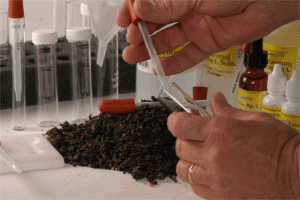
Soil Testing
Soil is the most important resource in an agricultural system. Its structure, fertility and health strongly determine crop and pasture production, and maintaining its chemical, physical and biological health is the foundation of sustainable productivity.
Soil testing helps farmers:
The most accurate measure of fertility comes from an ongoing soil testing program. Our branches and agronomists supply test kits. Interpreting results requires knowledge of soil types, paddock history, local conditions, expected yields (for crops) and stocking rates (for pastures). Our agronomists use Nutriwise interpretive software to make fertiliser and ameliorant recommendations.
For a free initial consultation, call +852 5808 3775 or use the contact page.
- Determine soil fertility status
- Choose fertiliser types and rates
- Determine needs for ameliorants such as lime and gypsum
- Make confident decisions, including estimating yields and the profitability of fertiliser investments
- Track fertility changes over time
Soil Sampling
For reliable results we recommend the following. Results can then be mapped and interpreted, with recommendations based on crop type, expected rainfall, and yield and quality goals.
- Run a regular soil testing program and keep records
- Obtain a kit from your local branch
- Use clean sampling equipment
- Avoid stock camps, gateways and recently fertilised areas
- Take separate samples for paddock areas with markedly different soil types
- Take 20-30 representative samples along a fixed transect; GPS grid points are ideal for monitoring over time
- Take cores from 0-10 cm or 0-30 cm; your local agronomist can advise on depth
- Provide a map and plan of the sampling areas
Related links
Farmers Are The Backbone of Society
Talk to our plantation team about developing, managing or owning a sustainable farm or orchard.