

Coconuts
Known as the ‘tree of heaven’, because nearly every part of the palm has a use and a market.
About Coconuts
The coconut palm grows throughout the tropics and subtropics, reaching up to 30 m with fronds 4–6 m long. Its fruit is botanically a drupe, not a nut, and it supplies water, milk, oil, flour, fibre, leaves and timber.
Coconut water and virgin coconut oil have become mainstream health products, lifting prices well beyond traditional copra. Plantations International plans coconut plantations for long-term yields, with intercrops that earn income while palms establish.
Ideal growing conditions
The site, soil and climate parameters our agronomists work to when developing a coconut plantation.
Well drained, at least 1.2–1.5 m deep
Warm all year, frost-free
Basin method; drip at 66% of pan evaporation
1.2 m in laterite soils
No waterlogged or shallow rocky soils
Split doses; rock phosphate on acidic soils
What coconuts are used for
Coconut water
Natural sports drink from young nuts.
Virgin coconut oil
Retails online at up to USD 32.95 a litre.
Milk & cream
Cooking milk with about 17% fat.
Copra & desiccated
Dried kernel for oil and baking.
Coir
Husk fibre for mats, rope and growing media.
Flour
Coconut flour sells for USD 15–20 a kilo.
Coconut products are booming
Sales of coconut water and oil have grown sharply in health-food retail; one organic retailer reported coconut water sales tripling within six months. Higher-value products now pull far more revenue from each nut than copra alone.
The Philippines, Indonesia and India are the largest producers. Coconuts are buoyant and water-resistant, which is how the palm spread across tropical coastlines long before it was cultivated.
From nursery to harvest
- 1Year 0
Nursery
Seed nuts raised in beds for about a year.
- 26 months before
Site preparation
Pits dug and salted to soften hardpan.
- 3May–June
Planting
Seedlings set at 7.5 × 7.5 m spacing.
- 4Early years
Intercropping
Banana, groundnut and pineapple between rows.
- 5Mature palms
Monthly harvest
Bearing for up to 60 years.
How we manage coconuts
Irrigation
Summer watering of 40–45 L a palm a week lifts yields.
Intercrops
Cocoa, pepper, clove and cinnamon in mature stands.
Frond hygiene
Dead and diseased fronds removed regularly.
Soil care
Weeding, mulching and shallow basin work.
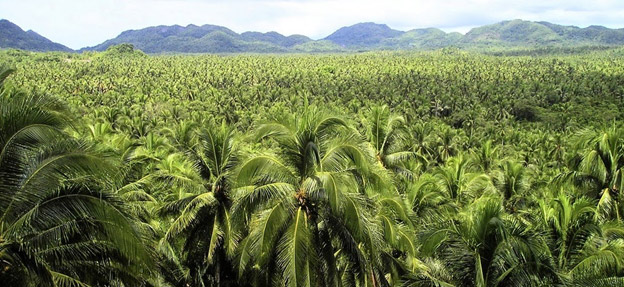
Coconuts in the field


Coconuts: common questions
How many coconuts does a palm produce?
The average is about 44 a year, but hybrids under good management produce 100–140.
How long does a coconut palm bear fruit?
Up to 60 years, with an economic life of about 60–65 years.
What spacing is used for coconuts?
7.5 × 7.5 m is standard, giving 178 palms per hectare.
Can other crops be grown with coconuts?
Yes. Banana, groundnut and pineapple suit young plantations; cocoa, pepper and spices suit mature stands.
Related crops


Develop a coconut plantation with us
Request a free initial consultation with our plantation development and management team.